

The hospital scene:
 The '41 version was very simple but it was interesting to watch. It was interesting because of the plot and the transformation of the Wolfman. The transformation in the '41 version was more mysterious and less gruesome. The transformation was more of fangs, more hair, and a larger forehead. The slow transformation techniques build up suspense and fear. Larry goes from feeling hair growth on his arms, to taking off his socks, and next thing you know a full blown werewolf. They made this werewolf more of a man beast by making him walk upright in the '41 version.
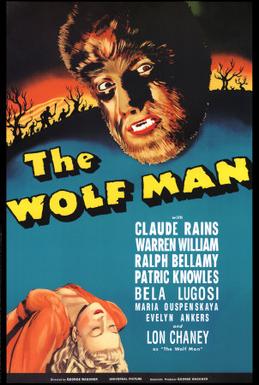
The fact that Lon Chaney, Jr., the actor who plays the Wolf man in the 1941 version, puts on the wolf man makeup and outfit even 30 years after the movie was made brings light onto how revolutionary this movie was. The Wolf man (1941) was the second time a werewolf was put onto the big screen, and, though the effects seem cheap and unrealistic, they were spectacular for the time.
The transformation in the classic film was much more strategic. The frame focuses on Chaney’s feet as he grows hair then walks away. This method was a money and time saving technique. Yet, the transformation was affective and makes the viewer see the wolf man as more human. Also, the story line is held stronger. So the approach is to show the audience that he is changing, then show him completely changed, sort of a way to shock the audience. All of this transformation happening with a film orchestra playing a thrilling score.
When Benicio transforms, his bones realign. His feet bulge out, and he grows sharp fang teeth. Most importantly, the audience sees all of the changes. The effective result is the transformation feels realistic. What the film looses is the stylistic method in capturing a believable transformation without ever really showing any truly realistic effects.
Whether the older or the newer Wolf man is better becomes irrelevant. The times were completely different. The newest version lost its style in the transformation, while the older one was obviously not real. While the newer one gets multiple shots at different angles, the older one tries to keep one continuous show of his transformation illustrating the patience of the time. As the CGI improves, the more our spectators expect real looking, fast-paced special effects.


 In the years following the original film in 1941, many advancements in film technology were used in to expand the abilities of film makers. Make up and basic video effects were used to convey specific images fairly well, however with the advances in film such as CGI and better film editing it allowed film makers to express themselves further. In Wolfman 1941 the transformation sequences are far less "scary" than the transformations in the 2010 version. However, the Wolfman's overall apperance is fairly similar. In the original film, the portrayal of the transformation is simple compared to today's graphic standards. The effects were limited to still scenes where the legs and feet slowly transformed by becoming hairier in a stop-motion-like effect. The Wolfman takes off his clothes in a state of confusion as he "magically" had more hair on his arms and pretended to have more hair on his face. Graphically these scenes portray a mildly scary emotion in our modern state of ever increasing need for realism. The 2010 film uses the advances of technology to enhance the emotions expected for the viewers. In comparison to the still scenes of the old one, the 2010 Wolfman shows the transformation sequence in a life like experience. No still scenes of the legs growing hair slowly, the 2010 film shows the feet exploding through his shoes and the heels actually transforming into the toe walking demon in a highly realistic manner. The 2010 Wolfman bursts through his clothes with intense emotion whereas the 1941 Wolfman simply undresses himself. The 2010 film also portrays the facial transformation with great virility as the wolf pushes his face through and brings itself forth. The 1941 film merely shows this facial transformation only once as a form of closure and silence to the fear that the Wolfman is intended to portray. Overall the use of greater technology in the 2010 film expresses the transformation sequences as intense and frightening for our visually desensitized minds and is fair complement for our modern time.


