Showing posts with label political expediency. Show all posts

Thursday, November 4, 2010

Fisher: Casablanca

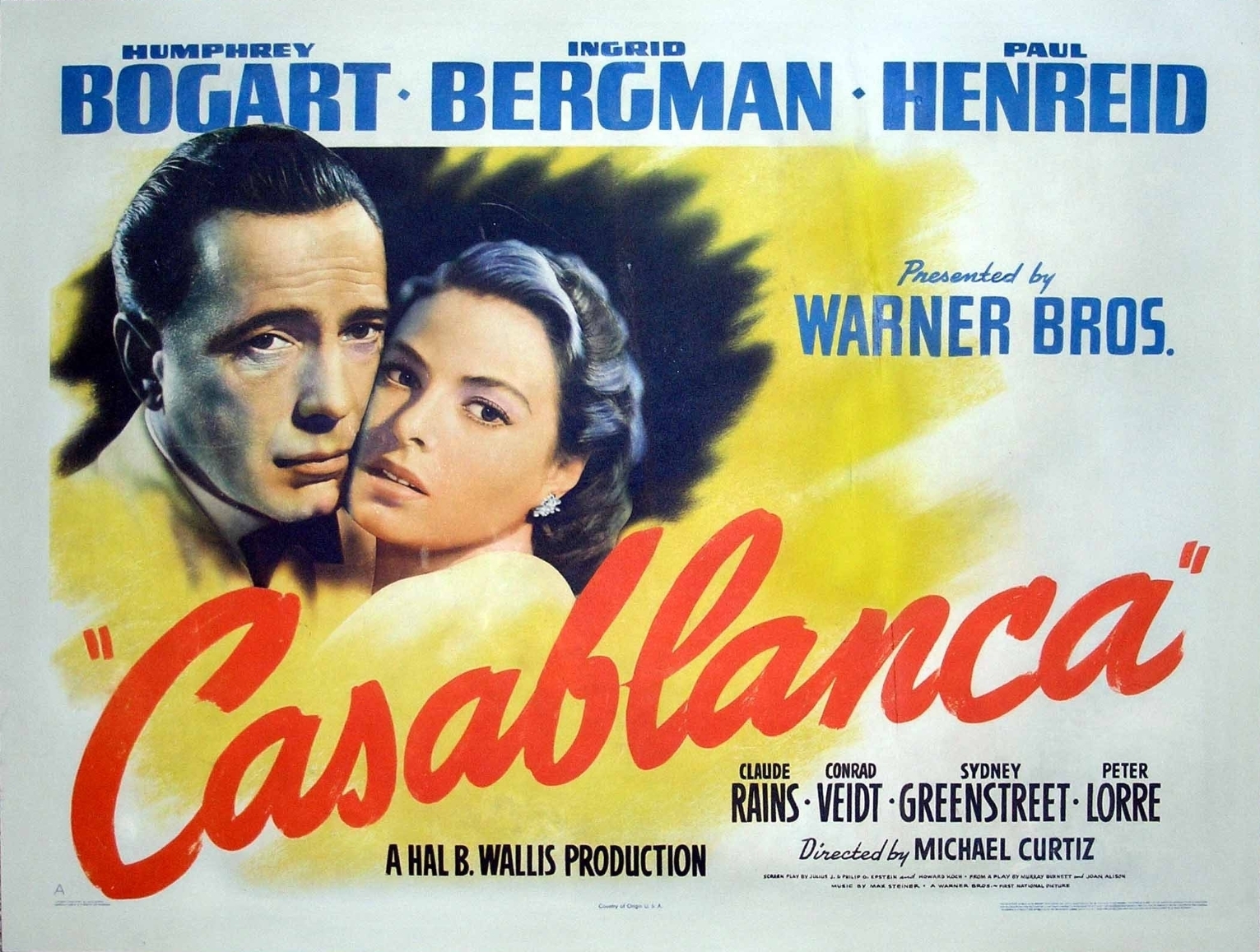
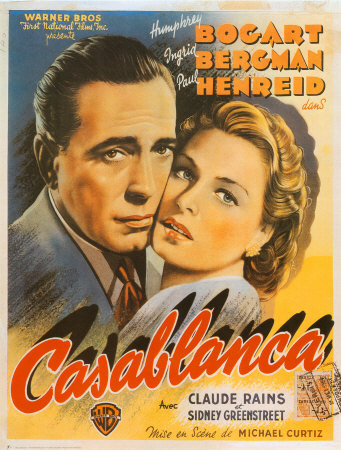
Casablanca
This lovely picture has survived decades of advancements in film and continues to live on as a timeless classic in American Cinema.  Much of the film's success has to do with when it came out in theaters and what was going on in the world at the time.  The film was based on a play called Everbody Comes to Rick's  that was read and bought by Warner Bros. (specifically producer Hal Wallis) in January of 1942.  This timing can honestly be seen as impeccable considering the tragedy of Pearl Harbor occurred just a month earlier on December 7, 1941.  This allowed for the movie to become the basis for justification by the American public for the United States entering the war.  That being said, after America entered the war on December 8 this movie was needed.  This time of propaganda, allows for the directors to play with the mise-en-scene in order to convey a political stance or message.  Usually, movies tend to try and stay politically objective in order to pull in the widest range of audience.
However, in Casablanca we see standpoint that was politically expedient to support the United States Armed forces entering the war after Pearl Harbor.  In fact they did not show the film in North Africa thinking it would upset the Vichy there. This standpoint is seen in the mise-en-scene of the scene between Rick (Humphrey Bogart) and Ilsa (Ingrid Bergman) at the end of the movie.  In this scene Rick has just made known his ulterior motives to Ilsa, and he delivers the famous line, "We'll always have Paris."  I would put Rick as the dominan, meerly because he is facing more towards the camera in this frame  It can be argued that Ilsa is the dominant because she is more toward the center. Also her white collar adds contrast that draws the viewers attention.  But it is Rick (USA) that is making the sacrifices and letting the Ilsa leave with her husband.  It took a girl, and a major loss (love) for Rick to finally involve himself in the war.  The chief sees this and decides to follow him as a friend and sympathizer.  The camera proxemics are intimate because the camera is right up in the faces of these two actors. Trying to capture every emotion, expression, or moment of brilliance.  Also the character proxemics are intimate as they are face to face for the entire shot in attempt to convey the deep feelings they possess for one another.  The lighting in the frame looks to be high and coming from a little behind Rick, putting Ilsa more in the spotlight. There are some subsidiary contrasts in the picture.  The eye focuses on the faces first, then strays to Ilsa's white collar next and finally Rick's black tie. Their staging positions are face to face in the shot in attempt to convey the strong feelings and history these characters have between each other.  Finally the frame of the shot is tight and closed, almost could be considered a close-up if it did not have two actors in it.  This type of shot is to show the personal relationship between the characters and there emotions in regard to that relationship.

We'll Always Have Paris...

Sunday, October 31, 2010

Isaacson: Casablanca


The political expediency theory, which was very important at the time of Casablanca's creation due to the USA's recent entrance into WWII, is best demonstrated in the film by Captain Renault's dramatic change of heart at the film's end. He shots and kills his German commanding officer, Major Strasser, to allow Victor and Ilsa to escape to America. This doesn't really make sense in the context of the film, Victor is Czech and going to America so he feels no nationalistic pride for him and he was just betrayed and placed at gunpoint by Rick, but it had to be done to please its audience who were feeling intensely nationalistic. Thus, the film comes to represent America's inevitable triumph over the Germans even with the odds placed squarely against them, something American audiences were hoping for in the still uncertain time of 1942.
The mise-en-scene of this final sequence is interesting and draws a distinct line between the good and evil characters. The dominant in most frames is either Rick or Renault, the two character's whose actions cause the events to unfold. The lighting key is seemingly ambient, but it is also focused to stress the light clothing that all of the "good" characters wear making them seem purer than the darkly dressed Renault and Strasser. The camera proxemic is normally personal or social, only becoming intimate during the talk between Rick and Ilsa. This, combined with the slightly downward angle of most scenes, make the audience feel like they are watching the action unfold from a more 3rd person perspective with the exception of the love triangle subplot which they should be emotionally invested in. Most frames are dense, having at least two or three characters in the frame at all times, which stresses the relationships between the characters. Most frames are also tightly framed, conveying the tension that the characters feel in this life or death situation. Finally, the character proxemics are used to convey ideological similarities and differences. For example, when Strasser arrives at the airport he stands near closer to Renault than Rick does, conveying their similar ideology, but as Strasser acts he move further away from Renault so that Rick is closer, conveying the shift that has occurred in Strasser at that moment.

Slan-Casablanca

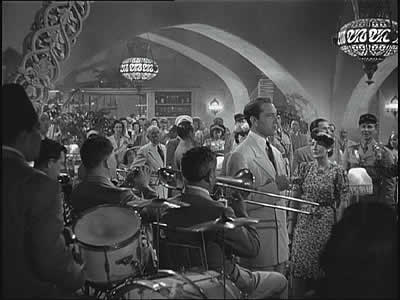
The political expediency theory allows films not to alienate an audience. Casablanca is a film that allows all people to witness a love story among political turmoil. The three main characters are Rick, Ilsa, and Victor. The setting is Casablanca, which is located in Northern Africa under Nazi rule. These three are trapped in a love triangle. The audience can see the love story unfold and more dangers present themselves as the story develops. Some people of the people of Casablanca want to move America to escape the political turmoil. In my scene, you get a balance of the love story and a balance of the political turmoil. In this scene you get to see the pride of the French in Casablanca out roar German Soldiers. The scene starts off with Victor and Rick standing on the balcony watching the Germans sing their national anthem in Rick's Bar. Victor rushes down the stairs and go directly to the band in the bar and demands them to start playing the French national anthem. As the band starts to play, people in the bar start to arise and singing their hearts out. The camera does several close-ups while they sing the national anthem. It closes up on Rick when he gives the band the okay to play the anthem. You can see the seriousness in his face when he gives the answer. It closes up on Ilsa when she glares at Victor with love struck eyes, as he directs the band and sings the anthem along with the others.
You can see the passion in her eyes during this close-up. It closes up on Victor singing the anthem with pride in his eyes. In this scene, you feel the national pride being shown and you get to feel the passion Ilsa feels for Victor in the scene as well. Rather you were watching the film for the love story or seeing how you can make Nazis sit down (SING YOUR NATIONAL ANTHEM LOUD AND PROUD), the camera proximity goes from social, to personal, and intimate as it goes throughout the room in the scene.

Follow this link to view the scene: http://www.youtube.com/watch?v=Yt1vQ81jNWw

Becnel Casablanca


The Political Expediency Theory is when the film tries to create a balance not to alienate the audience. They try to hide their message under a neutral veil. This is what Casablanca does. Casablanca's screenplay arrived at Warner Brothers on December 8, 1941 (one day after Pearl Harbor). Soon after America was involved in WWII. Rick (Humphrey Bogart) portrays a kind of American reasoning before the war. He "won't stick his neck out for nobody." Before committing to the war effort, America had an isolationist stand. We had broken out of it for WWI, but returned to it after. We find out that Rick did fight against the Fascists in Spain, but after secluded himself. As the film progresses, Rick softens and puts himself behind the war effort. He allows Laszlo to start singing La Marseillaises (the French Anthem) when the Germans are singing their song about the Reich. Risky move considering he is in Vichy France. He puts his neck on the line for the cause by helping Laszlo ( Paul Heinreid), a Free French activist, and Isla ( Ingrid Bergman), his love, escape from Casablanca. In the scene where Laszlo and the clients at Rick's sing their moving rendition of La Marseillaises (1:12: 40- 1:13:50) , the audience can get a feel of how important their heritage and way of life before the Nazi invasion is to them. This scene is very dramatic and emotional. According to Roger Ebert, most of the extras in the film where European refugees from the war, and the emotion that they showed while singing was real. They knew that they had to keep the memory and faith alive. It may just come across to some as just an opportunity to belittle the German oppressors, but to others it is a moving show of patriotism and the fight for what is right and cherished: a life where man can be himself and in charge of his own destiny, not a life where he is oppressed by a evil totalitarian regime. When watching this scene, you realize that your "problems don't amount to a hill of beans", and that you need to unslefishly put yourself behind the effort. You are not just fighting for yourself, but for all of those who have lost so much already and still keep the flame of hope lit in their hearts.


Mis En Scene:
  1. Dominant: Laszlo
  2. Lighting: high key on Laszlo, but low key in the foreground where the band is; in the background it is high key also
  3. Shot and Camera Proxemics: the camera is personal to social distance in the beginning, but moves in closer to intimate to personal distance as the scene progresses to create more of an emotional tie to the singers of the Marseillaise and Laszlo, their leader in song and spirit
  4. Angle: eye level; we look at the characters head on, and the camera is sometimes stationed behind people so we get more of a feel that we are there
  5. Density: this scene is very dense; there are alot of people and instruments in the scene; the scene feels cramped
  6. Depth: does not seem 3D
  7. Compostiton: the foreground, middleground, and background work together to give the audience that we are there and we are apart of the action

  8. Form: open; seems very natural
  9. Frame: tight; closed in; allows minimal movement; the characters stand up and move their arms; they do not walk about freely
  10. Filter: some kind of filter/ guase was used in the close-up shots to create a softer look
  11. Color value: the film is in black and white
  12. Subsidiary: after Laszlo, our eyes are drawn to the band and the clients at Rick's
  13. Staging positions: the characters look at each other
  14. Character proxemics: the characters arein intimate to personal distance from one another to create a sense of comradery
  15. Character placement: the characters are standing near the tables and band in Rick's


Thursday, October 28, 2010

Villacreces, Casablanca


The movie Casablanca by the director Michael Curtis was released in 1942, two years after the attack on Perl Harbor during World War II. The movie takes place in Casablanca, and a secondary story line in Paris. The movie presents Political Expediency , which means that the director presents a political message in the plot without choosing a side. It means that the director presents a sense of neutrality, instead of alienating himself to a side.
In the movie, a character that stays neutral throughout the movie is Rick. Rick is the owner of a bar in Casablanca. People that are from high class and members of the military go to this bar. The bar is one of the major setting in the movie, and through scenes in this bar we understand what businesses are going on. Rick had a strict "no drinks with customers", which makes him not get involved or not pick sides and stay neutral. This all changes one Ilsa comes back to Rick's life. He gets involved.


In this scene, we see the plane in which Laslo and Ilsa are on, Rick and Captain Renault. This scene represents how Rick let Ilsa leave with Laslo, while he stays in Casablanca in danger of being arrested because he just killed Major Strasser. It represents that Rick stopped being neutral in the war, and chose the side in which Laslo was because he loved Ilsa and wanted her to be safe instead of in danger in Casablanca.

Mise en Scene:
  • Dominant: the dominant in this scene is Rick and Captain Renault looking and the plane that is taking off. This represents how they are still in Casablanca during the war and they cannot leave like everyone else is.
  • The subsidiary contrast: is the plane taking off, you see this object just after you see Rick and Renault staring at the sky.
  • Angle: The angle of the camera is looking up, as if what Renault and Rick wanted to be in that plane and leave Casablaca. Also it represents how Rick is seeing Ilsa leave with another man even though he loves her. The angle represents what Rick and Renault want but cannot have by not being in that plane.
  • Form: the form is open. It represents how the plane is leaving with not problems. It represents that Ilsa and Laslo can leave with no issues, that everything was take care by Rick.
  • Character placement: Both Captain Renault and Rick are place in the bottom of the frame while the plane is on top.

Casablanca is a great movie. It is a beautiful representation of a love story during a rough time in history. Rick and Ilsa cannot be together due to the issues around them. It also represents how love can conquer anything and makes people do crazy things. Rick came out of his bubble of comfort and neutrality for Ilsa. I would recommend anyone to watch this movie. It is a movie that was released in the perfect time during World War II.


Phillpott--Casablanca


The movie Casablanca does a great job in quietly pushing its political message. The movie opens with Rick being "neutral" in his view of the war. As the movie slowly progresses, he takes a more active role in the things going on around him. He chooses to help Victor and Ilsa escape from Casablanca to America. This shows a deliberate decision he has chosen about the war. Somewhere along the way, he decided that America and the allies were the "good guys" and that the Germans needed to be stopped. In fact, he has to shoot the German officer to stop him from catching the couple when they are making their escape. Rick makes the decision of letting the good of the world outnumber his own happiness. He would be happier running away with Ilsa, but he knows that Victor is very important to the war and Victor needs Ilsa.

I have chosen the scene where Rick helps them escape. The lighting in this scene is dull and the background is lost in the fog. The fog is used here to show that what happens in this particular scene will effect what happens in the world. The war will be influenced by whether or not Victor gets away from Casablanca. The characters in this scene are positioned in a very thoughtful way. Rick is situated in the middle of the frame because he is representative of America, and this film was trying to push that America had to take a stand against the Germans. Victor and Ilsa flank either side of Rick because they will be affected by what he does. Their characters represent the allies because they needed America's help. The space in the frame for the three characters is cut-off by the police chief and the airport employee. These two characters represent the enemy because they are the forces in the film that could stop the escape from happening.

Everything in this movie has been meticulously staged to push the political message to join the war. Casablanca does not use political expediency like most movies do. It does not remain neutral; in fact it promotes a direct political decision. I think this movie pushes its own agenda in an intelligent and affective way.