Sunday, September 19, 2010
Azreen I., Wolfman
The hospital scene:
Villacreces, Wolfman Transformation and the Evolution of Filmmaking


VS.
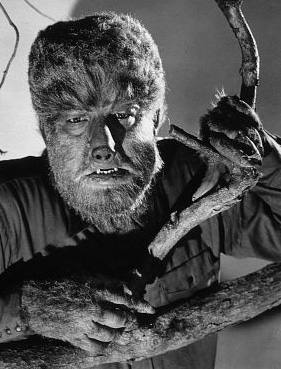
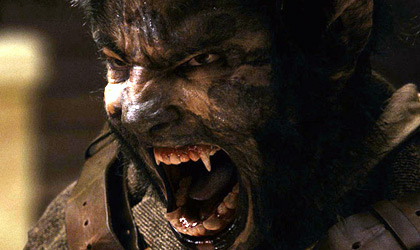
Villavicencio- Wolf Man vs. Wolfman
Unlike many classic remakes, Director Joe Johnston’s 2010 version, “The Wolfman,” manages to preserve the original film’s plot rather accurately. Despite obvious differences such as character details and running time, “The Wolfman” remains relatively true to the initial story.
One of the most notable, and obvious differences, however, could be the transformation from human to monster. Although both films provide decent depictions (given the technology available at the time), I believe the original version to be more innovative as a whole.
To begin with, “The Wolf Man” stalls transformation until about 40 minutes into the film. This approach allows not only for a better understanding of character relationships, but also for the building of suspense. When Lon Chaney finally transforms into the wolf man, one can only see the changes in small portions, such as the shot featuring solely the man’s feet as they grow long, thick strands of hair. (Curious as to how this was accomplished, I found that a slow process of photograph overlapping featuring different stages of makeup was used to illustrate a smooth change.)
In the 2010 film, CGI effects allowed for an excessively gruesome transformation, as the characters fingers and toes vividly break and mutate into animal limbs, cheekbones protrude violently from each side of the face, and carnivorous pointy teeth grow into place. The changes of each body part are significantly more details compared to the older film; yet, I believe the technique falls comparatively short to other films of this time.
Overall, the way in which the 1940 film managed to create a slow, mysterious change from man to monster is more impressive given the great time, effort, and manual work required for its success.
Wolfman 2010 Trailer
Gevry- The Wolfman
The transformation from man to werewolf is always a fantastic one for a moviegoer to see. Yet, with the amount of technological advancements over the years the journey has gotten far better. From the 1940s The Wolf Man to the 2010 The Wolfman, the effect this has on the metamorphosis from man to wolf. Immense bounds in CGI make the newest version of The Wolfman, directed by Joe Johnston, a visual feast for the viewer. Whereas the transformation within the 1940s version, though surely a spectacle in its day nowadays is hardly a movie going revolution. In Johnston’s film the viewer sees the Lawrence Talbot, as portrayed by Benicio Del Toro, completely transform himself into a full blooded, all out werewolf. From the make-up to the computer animation an entirely new creature takes form when the moon is full. Unfortunately in 1941 film, directed by George Waggner, the viewer doesn’t see the same transformation on such a spectacular level. Sure, Lon Chaney Jr.’s wolfman grows a lot of hair all over, gets a few sharper teeth, and walks on his tip toes but it doesn’t have the same effect as the newest version does- I mean the wolfman is supposed to be wild and ferocious yet in Waggner’s version he still wear a tucked in shirt with pants and a belt. Ferocious? I think not. Though both films are extremely entertaining and truly amazing works, when it comes down to which film harbored the best transformation from human to beast that would have to the 2010 The Wolfman, hands down.
And here is the winner:
Saturday, September 18, 2010
Thomas-The Wolfman
“What am I watching?” That’s all I could think while watching both versions of The Wolfman. This movie isn’t about the acting. For both versions, it’s apparent that the director wanted to experiment with special effects. The effects in both movies are used in different way.
The special effects (if you even want to call it that) in the earlier version are significantly different than the special effects in the later one. The most apparent difference is when Lawrence Talbot changes from a man into a wolf. In the early version, they use several different shots of his feet to show his transformation and it’s obvious. Each shot has more hair on them and his feet slowly turn into wolf feet.
In the later, yet equally terrible, version, there’s a use of digital special effects. The audience is able to see the entire transformation of Lawrence.
Both movies have significantly different endings. I thought it was interesting that the later one took has a completely different ending. Sir John and Lawrence have an epic battle where they’re both werewolves in a mansion that’s on fire. Sir John is killed by Lawrence. In the older one, Sir John is still a man and he kills werewolf Lawrence to save Gwen in the forrest at the end of the movie.
In the first one, Gwen Conliffe plays more of a “damsel in distress role” instead of a heroine that we see her as in the later version. Gwen kills Lawrence on her own at the end of the movie and saves herself.
Westerfield: Wolfman, the Real Top Dog
The most effective moments of the Wolfman (2010)come during the attack at the gypsy gathering, when Lawrence (Benicio Del Toro) ventures off after the werewolf and loses sight of him in the fog. We perceive the threat he poses to Lawrence but, like Lawrence, we cannot see him to know when or where he will strike, resulting in suspenseful tension. If only the rest of the movie followed this dynamic.
Instead it relishes in the prowess of digital imagery, and in terms of the films overall Gothic look this is effective. But it also means that we aren't spared any of the visceral details of the werewolf's violence, blood painting the screen as he slashes apart limbs and organs with graceful ease as though he were cutting through gelatin. The results in scenes that tend to be over-stylized and at times rather silly.
The 1941 version lacked the ability to produce comparable visual effects, but this isn't necessarily a bad thing. It relied on the implication of violence: cutting away before blows fell, having action occur outside of the frame or using objects such as trees to obscure it. But this isn't a slasher film. We don't even actually see the werewolf until two-thirds of the way into the film. Instead it spends more time building up the wolf's legend so that when the werewolf is revealed it's as a payoff. Here the monster's horror comes not as a result of it being a mass-murdering juggernaut, but something more subtle. This werewolf may not be as stylized as the 2010 equivalent but these imperfect effects, the glow of his eyes, the more humanoid face, create a sort of eeriness that is lost to the digital counterpart. Plus it doesn't look like a bear.
Christian- Fenwick, Wolfman
The two versions of the Wolfman were different in many respects: the acting styles, the story at points and the technology. Modern audiences have been thrilled by films such as Avatar with its amazing graphics, but simple and expected story. They have been tantalized by the sights and monsters produced by movies such as District 9. These element of CGI and cinematographic artistry were added to the remake, but not as successfully as the cast, crew and producers may have hoped. The older 1941 original version forced the audience to buy into the story of the film by stimulating their imaginations in the transformation. Nothing is scarier to a person than what they thin up themselves. While the graphics and the film of the original version seemed stilted and unrealistic to a modern day audience, it was astronomic at the time and absolutely thrilling to watch. With the 2010 version of Wolfman, I felt like the use of all the technology allowed for a movie in which the audience was entirely separated from the film and was not intellectually involved at any level with the film. The CGI and make allowed for the viewer to sit back and have someone create and imagine for them. It made the movie less thrilling because there was no personal thought put into the viewing of the film.
Friday, September 17, 2010
Hutchinson - The Hairy Beast

The advancements of digital technology have brought the visual ferocity and intimidation of movie monsters to life for modern moviegoers. Now, monsters are truly the stuff of nightmares. When the audience is first introduced to the werewolf in the 1940's version of "Wolfman," all that is clearly discernible is a dog-like animal, possibly a common wolf. While possibly a normal worry for someone camping in the woods, a dog-like wolf is hardly something that you fear will go "bump" in the night. Comparatively, the first time the "wolfman" is introduced in the 2010 remake, all you can see is a quick moving, vicious, snarling animal -- just enough left to the imagination to instill instant terror. When the wolfman actually transforms in the 1940's edition, the scenes seem to kind of pulsate as the change occurs, making it appear choppy and clearly fake. In the 2010 edition, thanks to digital mastering and special effects, the audience can actually watch the change perform, which brings a more life-like reality to it. Today, it is just easier to be frightened by monsters in the movies. They are so much more real. They no longer look like actors in make up; they look like honest to God creatures of nightmare, of myth and legend. There was a point in the 1940's version when the wolfman got caught in a bear trap. As the camera zoomed in, you could see the wolfman whimpering, a very human emotion. Today's movie monsters would not let a little trap on their foot hurt them, they'd pull it off and keep going. Digital media has made monsters much more monstrous, the way they're supposed to be. Monsters don't whimper and cry; they scream, howl, and roar as they rip apart people and buildings. They aren't really the joke they seemed back then.
Phillpott- The Wolf Man
Becnel Wolfman
Benicio del Toro's (Wolfman 2010) transformation involved " pieces of latex prosthetic make-up and loose hair, which were applied" by make-up artist Rick Baker "to del Toro's face each day" and "several dentures and wigs" (Wikipedia). The transformation was computer genrated, which did not sit well with Rick Baker, because he felt that "it would look unrealistic" and the animators did not have his creative "knowledge of design" (Wikipedia). He is a fan of Pierce and wanted to stick to the feel of the original. When Benicio del Toro transformed, he, like Chaney, Jr., looked like a man with wolf- like features. He still had discernable human features, but looked more supernatural. His hands, feet, and body morphed, instead of just growing hair all over his body and his nose changing (like Chaney, Jr.'s transforamtion). You were able to experience the full transformation, instead of experiencing only parts of it, like in the original. In my opinion, del Toro's transformation is more of what I think of as a transformation into a supernatural being than Chaney, Jr.'s.
Thursday, September 16, 2010
Falanga, The Wolfman Effects


The 1941 classic Wolfman and the newer 2010 Wolfman illustrate different dynamics of the horror or suspense sequences solely through the integrating of CG effects in the newer version. The Wolfman of past was created solely out of prosthetics and a harry outfit. The sequences that show the transformation from man to werewolf are done by editing techniques rather than full on exposure of a full transformation. The audience is only able to see the feet or hands transform in close ups. This created a more illusion of suspense or uneasiness as we are still unable to see his full werewolf self. However, the wonders of CG have given us the more gruesome and horror aspect in the film because we see bleeding from the mouth, bones breaking, hair elongating, as well as muscles and joints becoming disconfigured right before our very eyes, which is horrifying and amazing at the same time. Through the ability to see this whole transformation the audience is even more terrified because we see exactly what this “curse” is capable of and how it affects the main character. However, the CG used in other circumstances was not as good and gave the film an unauthentic feel such as the look of the animals and sometimes the werewolf when seen during running sequences. We are able to understand and literally see the full power of the werewolf while in the 1941 version we are hidden from actually seeing these kills and transformation, allowing a higher sense of suspense but not executing on believability. The positives of the newer CG movies are the amount of detail and realism if executed correctly, but the older style of makeup and costumes can heighten suspense and demands better use of camera angles and lighting in order to not entirely put all the audience’s attention on the beast or monster.