Showing posts with label camera movement. Show all posts

Friday, October 22, 2010

Falanga, Social Network Review


The Social Network excelled in allowing the story arc to flow naturally while segmenting into different points of the whole story. We see the characters and their relationship with Zuckerberg at the end of the story which allows for suspense and interest into seeing how these relationships formed. As the film moved from court scenes to moments in the progression of Facebook, the audience is able to learn about the unfolding of the present situation, which is the lawsuits, while also seeing the forming and development of the actual Facebook site and how it came to be. The narrative was unorthodox but refreshing and insightful, this unique portrayal of the history of Facebook allowed for a dark tone in the ruining of friendships and loss of control from Zuckerberg. The character of Mark Zuckerberg, played by Jesse Isenberg, was done very well, the large hint of confidence and also loneliness always resided and came off from his dialogue and mannerisms. The Winklevoss twins was done very well as they were played by two different actors, but re-digitized through CG into having the same facial feature to that of the actor Armie Hammer. The cinematography was also excellent as the lighting was dark and metaphorically portrayed how Zuckerberg would be feeling or how unease he was. The opening shot with Zuckerberg walking through campus was a great shot complete with dolly and crane shots for the overhead of Harvard, which didn’t let the production studios use as a set so they had to reconstruct it in a California studio back lot with the exemption of a few shots in which the lighting had to have been heavily manipulated in order to see Jesse along with the background at night. Whether the actual facts were portrayed accurately in the film is ambiguous, the purpose of a movie can be to take an idea and skew it to whatever the visionary would like it to be. The main ingredients of the lawsuits were there, the rest was all for drama and suspense which worked really well in the film. Another telling of the actual story would suffice in the form of a documentary; the viewer should know it is based on the facebook story but told with greater drama to be interesting. The filmmakers have all said the movie is based off of the main plot line. In all the film does a great job at portraying the main ideas and pushes behind facebook while keeping a high stake in drama and authenticity in the narrative style. For me this film entertained and gave key plot points in the actual facebook story while delivering a innovative, endearing, and visually unique experience on the screen.

Sunday, October 17, 2010

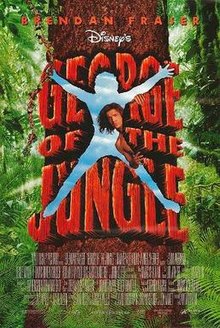
Himmelberg, George Of The Jungle - Movement


The first time i watched George of the Jungle I thought it was an extremely stupid but funny movie. The second and third times around, (watching it at an older age), I think that it is actually kind of entertaining. I especially like"Ape", the talking gorilla, and George, the dumb yet noble, genuine and loveable man. I think it is funny and ironic, how the Ape is more sophisticated than the human.

The scene that I want to look at involving movement, that adds in these ideas is the scene when George is going to save ape. First he gets out of a crate which he has shipped himself to africa in, puts on his nike sneakers and then he starts running. He runs all through the jungle and the mountains. This movement represents real chivalry, courage, bravery etc. He has left the woman he loves to go help his best friend and when he runs they play up his body and his stride is very chivalrious. Even though it is definitely a satire on chivalrious scenes from other movies, this is the first time in the movie where George is portrayed as not being extremely dumb and animalistic. He shows characteristics through this movement that we haven't fully seen before and although he goes back to being slapstick funny and stupid quickly after this scene. For a minute or so we are shown a different, manly, chivalrious side of George that changes the audiences view of him a little bit and definitely gives him more respect.

Nolley- George of the Jungle


The scene that I felt had the best use of movement was the scene in which George was swinging on his vine trying to impress Ursula. The movement in this scene created a very comedic feel that helped lock down the movie as a children's comedy. The use of a dolly shot in the scene was helpful in creating a swinging feel. It was more effective than if the camera had remained in one spot and briefly caught George swinging. With this technique the audience has the feeling of swinging right next to him which makes them more present in the scene. It seems apparent that in this film movement is used to revamp the comedic feel. In other scenes (like the dog/elephant scene), the movement of the camera is used to emphasize the campiness of the film. It even adds a bit of suspense to what George's dog actually is. The fact that the camera is shaking, showing that the ground is rumbling from something quite large, makes the audience question what on earth George could be calling toward him and Ursula. This technique helps to peak the audience's curiosity and the scene would be much less effective if the camera movement had not been used. The combination of sound and movement can create a whole new feel to a scene and create a much more enjoyable experience for the viewer. George and the Jungle uses movement in interesting ways to achieve an extremely cheesy feel to the movie. This campy essence is what has made George of the Jungle the family classic that it is today.


Thursday, October 14, 2010

Falanga, George of Jungle Movement


The scene in which George walks in on a dance class and plays the drums and dances around contains many forms of movement. The camera closes in on George's hands which are banging the drums, then goes chaotically around the room while spinning and going upside down to illustrate the moves of the dancers. This type of sporadic yet rhythmic movement that seems chaotic is a portrayal of how George lives his life in the jungle, which may seem chaotic but has a rhythm and beat with harmonious parts to it. The seemingly barbaric lifestyle of George which may seem like running around is actually movement with a tempo, much like the way he plays the bongos and dances in this quick scene. The ballet dancers are swiftly circling and moving around using all parts of there body whilst the camera goes crazy and even tilts upside down a few times to convey this craziness that is still fun and enjoyable from the mood given as the music is quick yet uplifting and the dancers smile and jump with much energy and enthusiasm. The chaos evident in the scene still has a purposeful flow in that even though it may seem unordered, it is still giving a message of control because everyone's happiness and energy that is lead by George. This chaos is illustrated as a good thing and shows George's character not one of uncontrollable barbaric image but as a different means for being high spirited and living life. The movement in this scene captivates George's mode of chaos and rapid pace as something positive and fun loving not different and foolish.