Here in the first part of this clip is the transformation of Lon Chaney Jr. into the wolfman in Waggner's 1941 film:
Here is the 2010 version of the transformation:


 As human society and technology evolve our entertainment industry evolves with them. This can not be more apparent than in the transformation scenes of the two Wolfman movies, The Wolfman (2010) directed by Joe Johnston and The Wolfman (1941) directed by George Waggner. In the 1941 version of the movie, the filmmakers had limited technology to make the transformation as scary as they could make it. They take you almost frame by frame as Larry Talbot removes his clothing one piece at a time to reveal a hideous transformation occurring. We see his nails grow and his legs sprout a heavy fur coat, but the rest of the horrid transformation is left up to the imagination.
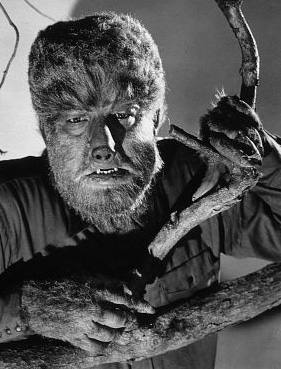 Obviously, the 2010 version of The Wolfman has more advanced computer animation capabilities and is able to provide a more visually convincing transformation of the movie's main character into a wolf creature. While neither looks incredibly realistic (ignoring, of course, the nonexistence of werewolves), the 2010 version depicts a more believable process of transformation, rather than the 1941 method, which was simply a fade from human to creature.
 After watching both movies, I can officially state the fact that the transformation scene from the first movie was kind of lame. I understand that special effects didn't exist back then and that we are all used to great science fiction movies but I was not impressed at all. However, in the new Wolfman, I was completely blown away by the graphism induced. It reminded of the
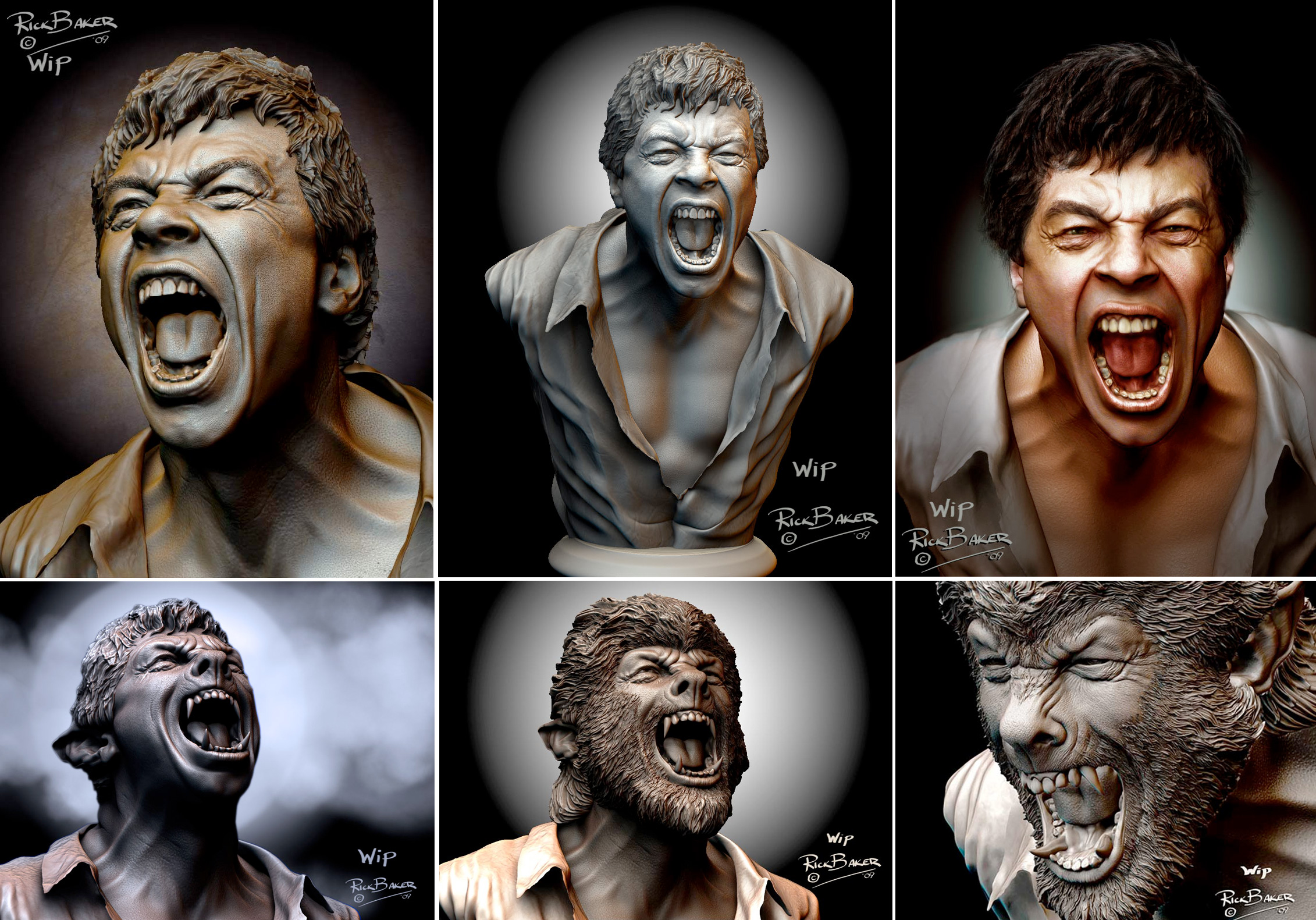 In the new Wolfman, the director focuses mostly on the facial structures transformation to enhance the pain factor. We can clearly see how painful the mutation must be just by looking at his face. The first change, is the facial bones readjusting (his chin and ears get longer, his jaw grows bigger and his teeth turn to razorsharp killing machines.) The second change is the growing hair which is slowly expanding along his body. Also notice how the eyes are changing when the camera zooms in during the first transformation. The noises from his bones cracking and cloth ripping off are just horrifying and gruesome but reinforce that idea of realism. The director does not omit any details because he wants us to really believe this is real.
One of the most striking things about The Wolfman(2010) is its visual style. The whole film appears to have been shot through a grey filter, which I believe was a way for the filmmakers to replicate some of the intense lighting effects seen in the original. The best time when this can be seen are the two films werewolf bite sequences. In both movies Lawrence and Larry chase the wolf attempting to protect an innocent victim. Both sequences have very low key lighting, attempting to replicate the lighting of the full moon alone, and both scenes are also heavily obscured by fog. However, there are also some notable differences between the original and the remake: length, technology, set design, and use of American and foreign actors. The original was a short film, 69 minutes, while the remake runs almost two hours at 119 minutes. Also, due to the vast difference in technology between 1941 and 2010 makes the direction of the film radically different, the original keeping much of the action hidden while the remake focuses on the gore of the werewolf's destruction. The set design is also radically different, with the village in the remake appearing far more rundown and foreign then the tidy, Americanized village of the original. Also, some of the remake occurs in different locations while all of the original is set in the village. Finally, we the exception of the gypsy women, nearly all of the characters from the original are very American. They speak with American accents and wear American style clothing. However, in the remake the filmmakers embrace the foreign setting. Even the origin of the protagonist is shifted, Larry coming from California and Lawrence coming from London. This is indicative of the shift in Hollywood that has occurred between the two films, with filmmaking now being more of a global enterprise and American filmmakers being less afraid that American audience won't be able to empathize with foreign characters.


 regular man into a werewolf, but the were
 wolf resembles a big hairy dog more than anything else and isn't really frightening. At the time audiences may have been scared of this stuffed animal type monster but compared to today it is absolutely laughable. In the 2010 version of The Wolfman the character changes into a very frightening, very real werewolf, his claws and teeth are very much the selling points for me. It is a lot more believable than the hairy costume that served as the werewolf in the 40's.