Sunday, September 19, 2010

Armato: The Wolfman, Technique vs. Technology


Obviously, the 2010 version of The Wolfman has more advanced computer animation capabilities and is able to provide a more visually convincing transformation of the movie's main character into a wolf creature. While neither looks incredibly realistic (ignoring, of course, the nonexistence of werewolves), the 2010 version depicts a more believable process of transformation, rather than the 1941 method, which was simply a fade from human to creature.

If we look at these two transformation scenes in the context of available technology at the time of the films' releases, however, the 1941 version is far more impressive. The 2010 version's computer animation resembles a cartoon rather than a live-action sequence. Of course, the transformation sequence essentially is a cartoon, but other studios in these times produce far more convincing digitally animated sequences. Wolfman 2010 did not show any mastery of modern CGI technology, while Wolfman 1941 shows a mastery of the available special effects technology of its time.

Griffin: The Wolfmans of 1941 & 2010


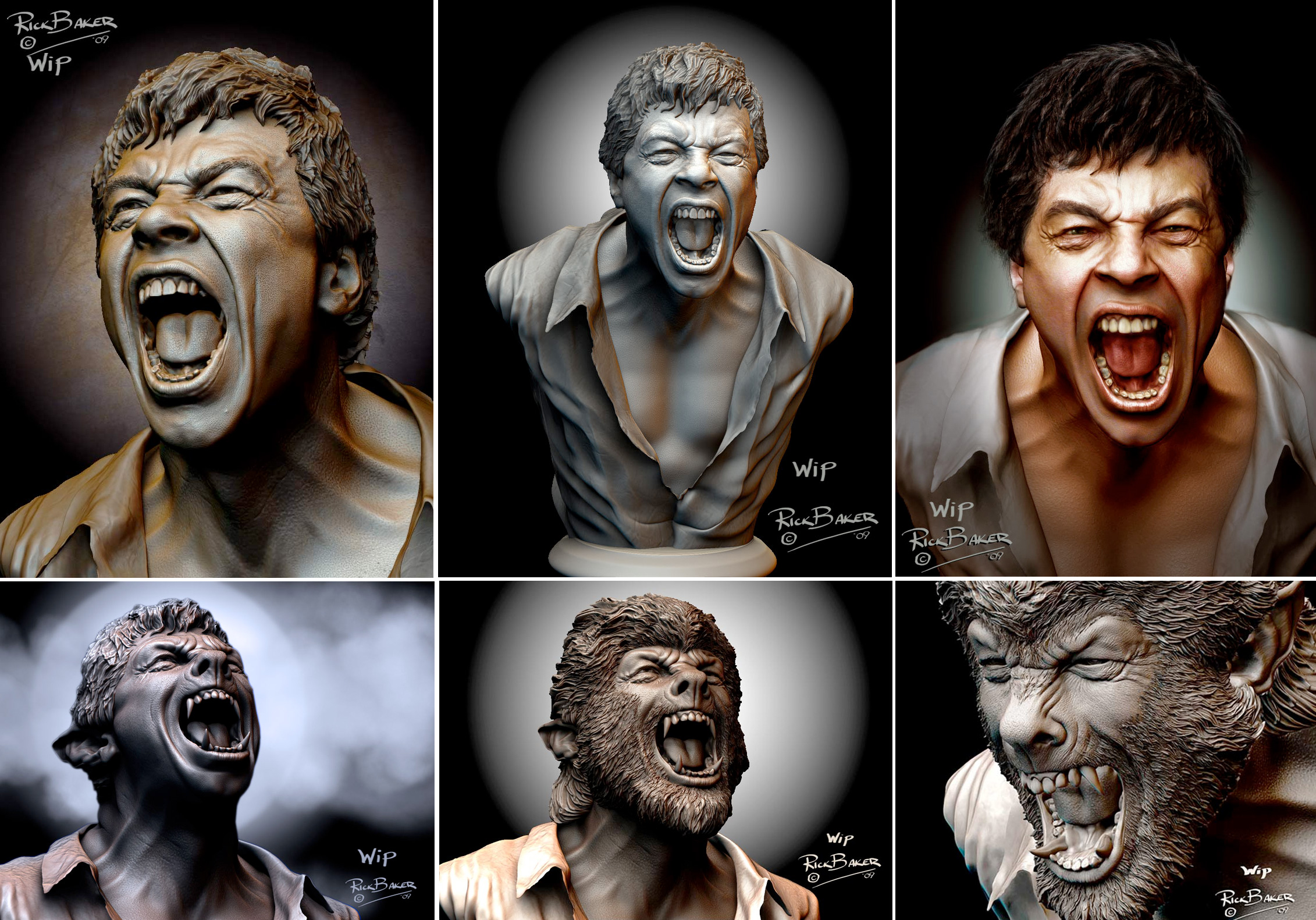
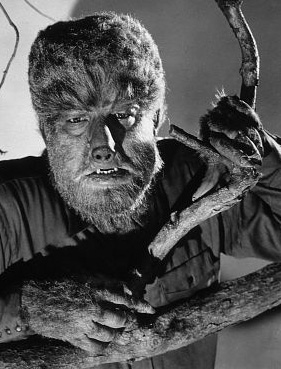
The transformation of the 1941 Wolfman film is mostly characterized by a gradual increase in body hair. First, heavy tufts appear on Larry's legs, then spreading to create the monster seen in the picture on the left. He walks bent over, but not completely on all fours. This wolfman is alarming, but seems more demented and clumsy than the modern-day incarnation of 2010. Benicio del Toro's Wolfman is fiercer, stronger, and more terrifying. His transformation from man to beast has a more suspenseful pacing Each part of his body is given focus as it shifts into monster. The way in which his body is revealed contrasts with the upfront style of ‘41. The ‘10 wolfman is gradually revealed through shadows, momentary head shots, profile views, close ups on his claws, feet, eyes popping. This transformation is more impacting and precious than the brusque, sillier version of ‘41. The ‘10 feels more “real” because of the physical logistics of transforming that are shown: the bloating of his face, the popping of jewelry and clothing no longer able to fit to the growing body. The modern wolfman is stronger and more agile, and rather than just transforming into a very hairy man, he actually becomes a wolf. He gallops through the forests on all fours, whereas the older wolfman looks like a lost zombie. Del Toro’s wolfman is also more fleshed out, given the more sophisticated sound effects attributed to his monster, as well as the sense that there is this separate, evil force bursting out of the man. However, on a conceptual level, the older wolfman appeals to me more because he represents the classic archetype of a tragic hero in ancient Greek tragedy. Larry becomes entangled with evil through his heroism in defending the first victim of a were-wolf in the film. By no fault of his own, his fortune is suddenly reversed. This inexplicable, senseless destiny is profound as it references the similar protagonists in tragedies, also slighted by fate  In this newer version, psychological theory is applied to understand why is this man a monster.

Wolfman Comparisons Olivia Tucker

Wolfman-final-small.jpg


There are obviously many differences between the 2010 Wolfman and the 1941 Wolfman. Mostly being the effects, obviously the lighting the coloring and helped to make the '10 version more realistic and scary compared to just black and white. Also the changes in character relationships definitely became more "hollywood". For instance in the '41 film Gwen is just a local owner of an antique shop. While in the '10 film she is Ben's fiance which ofcourse makes things more dramatics when her and Lawrence find they have feelings for eachother. But one of the main differences would be the special effects. There is alot more blood and gore in the '10 film and the transformation scene looks more realistic. In the '41 film the transformation scene is just all around unconvincing while in the '10 Wolfman the transformation scene could be the best part. Also the ending is a very big difference between the two films. In the '41 film it just ends with Lawrence running away from the police turning into his human form while in the '10 film the plot is brought to a better ending that ties up most of the loose ends with Gwen shooting him. Ofcourse the '10 fil mwas more convincing and enjoyable to watch but I did find that it was too long and seemed to be dragged out. Also I thought the actor, Benicio Del Toro, wasn't very convincing. But all around the movie was well made and the settings were beautiful.

Azreen I., Wolfman

There are striking differences in the transformation from man to wolf in the 1949 Wolf Man and the 2010 Wolf Man. Obviously, the 1949 Wolf Man would be expected to have less of special effects considering the time it was made. In the 1949 version, the transformation of man to wolf was not that visually active. For majority of the transformation, they only showed the hair on his feet get longer. It was not actually shown how the transformation took place. It was kept to a very minimal. Thus, leaving the audience to imagine how Lon Chaney Jr. fully transformed from a man to a wolf man. Also, the picture quality and the fact that it was black and white does not make it visually attractive to the eyes. Also, one can tell that Jon Chaney Jr.'s wolf man seemed very fake like. Obviously, if we were to think of it from the point of view of someone watching it when it was released in 1949, it would be a great feat. Around those years, there was no movie like Wolf Man. But nowadays, visual effects/special effects play an important role in practically every movie. In the 2010 version of Wolf Man, the special effects of the transformation were pretty vivid. They show how Benecio Del Toro's body changes. From the hands getting distorted, from blood coming out of the nails as they grow longer, from the bones in his face shifting to even how the teeth change. The most visual transformation scene is when Benecio Del Toro was in the hospital room with all the doctors there to observe him. The transformation scene in the 2010 version is obviously more visually pleasing. One can actually see his transformation. Also, the minute details such as blood coming out of his mouth while his fangs replace his teeth make it more realistic as well. In all, the 2010 version of The Wolf Man showed a well thought out transformation from man to wolf and allows the audience to see the transformation. Whereas the 1949 version, leaves it up to the audience's imagination on the transformation.

The hospital scene:

Villacreces, Wolfman Transformation and the Evolution of Filmmaking


VS.


Wolfman (2010)           Wolfman (1941)

It's been 69 years since director George Waggner made the first Wolfman movie. Technology and filmmaking have evolved ever since.  Because of this reason director Joe Johnston remade the movie. There are certainly a lot of differences between both movies, but what strikes the viewers the most is the  transformation from man to werewolf. 
In the 1941 version, you see  Larry Talbot struggling with fear, shame, and uncomfortability towards himself. He hides from people and does not know what is going on. As he removes his clothing, the frame present a change in his feet and nails, when in a different scene you see the changes in his face. the filmmakers were able to present this change by good editing. They changed his appearance frame by frame. 
On the other hand in the 2010 version of Wolfman, Lawrence Talbot has a  different reaction to the change. He fells angry, it seems as if the anger of the wolf is causing this change. You see a sense of unconfortability, but no fear. In the scene in which the doctors are examining what changes the full moon could make him have, he is angry and seeks revenge. The visual effects in the scene are made thanks to CGI. It is all computer animated. The advantage of computer animation is that you are able to see all the changes in his body, starting from his feet  to his eyes. There is detail, and the transformation is more real.
Both portray the transformation of the Wolfman using the technology that each time frame had in their power. The 1941 version could not presented more perfectly that they did. But the 2010 version has too much computer animation, which makes it look a little bit fake. 

The evolution of technology is allowing the filmmakers to do anything, including making a man go from human to werewolf. 

Slan-Wolfman Transformation

The 1941 Wolfman and the 2010 Wolfman weren't the best films I've seen but they weren't the worst.

The '41 version was very simple but it was interesting to watch. It was interesting because of the plot and the transformation of the Wolfman. The transformation in the '41 version was more mysterious and less gruesome. The transformation was more of fangs, more hair, and a larger forehead. The slow transformation techniques build up suspense and fear. Larry goes from feeling hair growth on his arms, to taking off his socks, and next thing you know a full blown werewolf. They made this werewolf more of a man beast by making him walk upright in the '41 version.


The '10 version does more of a gruesome transformation. The computer generated transformation is interesting to look at but hard to take in. Lawrence's transformation appears to be more painful. Bones are breaking and changing. His teeth are getting sharper and his muscles are growing. The '10 werewolf looks like a body builder who got a hold of some bad steroids. This werewolf has more beastly characteristics. It runs on all fours and possesses amazing strength. The computer generated werewolf is hands down a better looking werewolf.

The techniques used in both films were great. They made both look realistic. You could tell that both were not in homemade Halloween costumes. The technology in 2010 was not available in '41 but the werewolf was believable. The '41 version gave filmmakers a foundation and it has evolved ever since then. If you see the werewolves in "Underworld" or "American Werewolf" films you'll notice that they are each have their distinctive characteristics. No two werewolves are the same.

Mathey Transformation scene from the Wolfman (old and new) analysis

After watching both movies, I can officially state the fact that the transformation scene from the first movie was kind of lame. I understand that special effects didn't exist back then and that we are all used to great science fiction movies but I was not impressed at all. However, in the new Wolfman, I was completely blown away by the graphism induced. It reminded of the
transformation of the Hulk, when his clothes and shoes rip because they cannot retain the growing body parts.
In the Wolfman from 1941, the director just focus on the character's legs and took many shots after adding Yak hair each time. He also uses a grey filter to create a darker atmosphere.


In the new Wolfman, the director focuses mostly on the facial structures transformation to enhance the pain factor. We can clearly see how painful the mutation must be just by looking at his face. The first change, is the facial bones readjusting (his chin and ears get longer, his jaw grows bigger and his teeth turn to razorsharp killing machines.) The second change is the growing hair which is slowly expanding along his body. Also notice how the eyes are changing when the camera zooms in during the first transformation. The noises from his bones cracking and cloth ripping off are just horrifying and gruesome but reinforce that idea of realism. The director does not omit any details because he wants us to really believe this is real.
Apart from technological advances, the beast look very similar in both movies. Just a very hairy face with fangs even though Benicio Del Toro's make up and costume looks way more realistic thanks to synthetic ingredients. I must however point out that the transformation of Benicio del Toro in the new Wolfman is computerized and the wolf is not really the actor while in the old Wolfman, the beast really is the same actor, even though it does not look as cool.